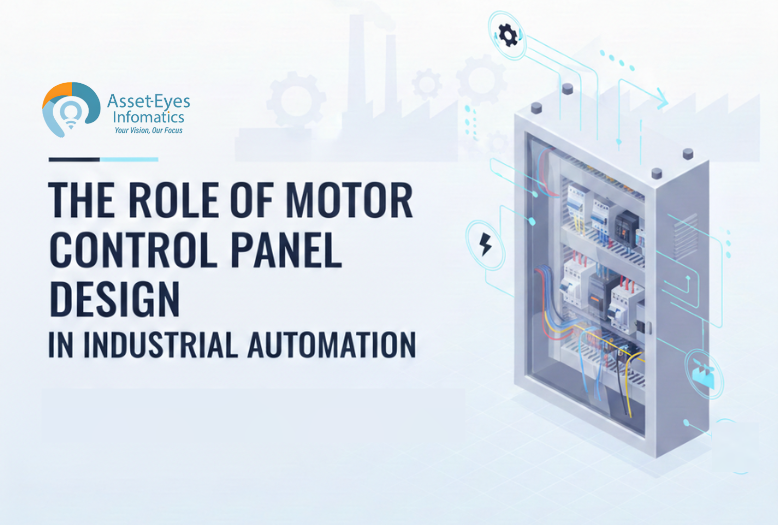
Industrial automation has reshaped nearly every sector, from manufacturing and energy to infrastructure and process industries. Machines now communicate, processes self adjust, and systems operate with minimal human intervention. Yet beneath the surface of this technological sophistication lies a foundational layer of electrical engineering motor control panel design.
Motor control panels may not attract the same attention as robotics, AI systems, or advanced analytics platforms, but their influence on automation performance is immense. They govern how motors behave, how safely systems operate, and how reliably industrial processes run. A well designed motor control panel is not merely a control box; it is an intelligence hub, a protection system, and an efficiency optimizer.
To fully appreciate their importance, it is worth exploring the deeper role of motor control panel design across industrial automation environments.
Understanding Motor Control Panel Design
A motor control panel is an engineered electrical assembly designed to manage, protect, and monitor electric motors. In automated systems, motors are responsible for physical movement, rotating shafts, driving belts, pumping fluids, compressing gases, and powering countless mechanical operations.
However, motors cannot function optimally when directly connected to power sources. They require controlled startup, regulated operation, protection against electrical anomalies, and integration with logic based systems. Motor control panels fulfill these responsibilities by serving as the command center between electrical supply and mechanical output.
Modern panels go far beyond basic switching. They support intelligent motor behavior by enabling dynamic responses to real time operational data. For example:
- Adjusting motor speed based on load variations
- Coordinating motor sequences within automated workflows
- Responding to sensor feedback instantly
- Protecting against unpredictable fault conditions
In essence, motor control panels transform raw electrical energy into structured, predictable, and safe mechanical performance.
Why Motor Control Panel Design Matter in Automation
Industrial automation depends on precision, coordination, and reliability. Even the most advanced automation software becomes ineffective if the underlying electrical control systems are unstable or inefficient.
1. Intelligent Motor Behavior
Automation systems operate based on logic and data. Motor control panels enable motors to react intelligently rather than operate in fixed, rigid modes. Motors can accelerate gradually, maintain optimal speeds, reverse direction, or synchronize with other equipment.
Without this layer of intelligence, motors would operate in simplistic on/off patterns, severely limiting automation flexibility.
2. Operational Continuity
In industrial environments, downtime is costly. A single motor failure can halt entire production lines. Motor control panels incorporate fault detection, protection circuits, and monitoring systems that prevent minor issues from escalating into system wide failures.
3. Equipment Longevity
Motors represent significant capital investments. Improper starting methods, voltage fluctuations, and overload conditions reduce motor lifespan. Control panels mitigate these risks through carefully engineered protection mechanisms.
4. Safety Assurance
Automation increases system complexity, which can introduce new safety risks. Panels act as safety guardians by isolating faults, preventing overload hazards, and enabling emergency shutdown procedures.
Motor control panels are therefore not optional accessories they are structural pillars of automation infrastructure.
Key Components of a Motor Control Panel Design
Each component within a motor control panel contributes to its performance, safety, and intelligence. Their selection and arrangement define how effectively the panel supports automation.
1. Circuit Breakers and Protection Devices
These devices defend systems against electrical disturbances. Short circuits, overcurrent conditions, and voltage irregularities can severely damage equipment. Protection devices ensure faults are isolated instantly.
Advanced panels often include layered protection strategies, combining multiple devices for enhanced reliability.
2. Contactors
Contactors regulate power flow to motors. In automated systems, motors must respond rapidly to control signals. Contactors enable safe and reliable switching even under heavy electrical loads.
3. Overload Relays
Overheating is one of the most common causes of motor failure. Overload relays monitor current levels and disconnect motors when unsafe conditions arise, preventing thermal damage.
4. Variable Frequency Drives (VFDs)
VFDs are among the most transformative elements in modern motor control panels. They allow motors to operate at variable speeds, drastically improving efficiency and precision.
Instead of running at constant full speed, motors adapt to actual process demands.
5. Programmable Logic Controllers (PLCs)
PLCs introduce decision making capability. They coordinate motor operations with sensors, process conditions, and system logic.
For instance, PLCs can manage interdependencies such as:
- Starting Motor B only after Motor A stabilizes
- Adjusting motor speed based on temperature feedback
- Executing safety shutdown sequences
6. Human Machine Interfaces (HMIs)
HMIs bridge the gap between operators and automation systems. Visual dashboards provide real time insights into motor status, alarms, and performance metrics.
7. Terminal Blocks and Wiring Infrastructure
Orderly wiring is critical. Poor wiring design leads to troubleshooting difficulties, heat buildup, and safety risks. Structured connectivity ensures long term maintainability.
Every component is part of an interconnected ecosystem rather than a standalone device.
The Design Perspective: More Than Assembly
Motor control panel design is fundamentally an engineering discipline, not a mechanical assembly task. Successful panel design balances multiple factors simultaneously:
- Electrical performance
- Thermal stability
- Safety compliance
- Maintenance accessibility
- Future scalability
Designers must anticipate real world operating conditions, including fluctuating loads, harsh environments, vibration, dust, humidity, and temperature extremes.
A poorly designed panel may function initially but gradually introduce:
- Frequent nuisance tripping
- Component overheating
- Difficult maintenance procedures
- Unexpected system failures
Conversely, thoughtful design ensures predictable performance across the panel’s entire lifecycle.
Critical Design Considerations – Motor Control Panel Design
1. Load Analysis
Accurate load assessment determines system stability. Designers evaluate motor characteristics, including starting currents, torque requirements, and operational duty cycles.
Ignoring load dynamics can lead to undersized components, resulting in premature failures.
2. Thermal Management
Heat is an invisible adversary in electrical systems. Dense component placement increases internal temperatures, which degrade insulation, reduce efficiency, and shorten device lifespan.
Thermal management strategies include:
- Ventilation paths
- Cooling fans
- Heat exchangers
- Intelligent airflow planning
3. Safety and Compliance
Industrial panels must comply with established safety standards. Proper grounding, insulation, and fault isolation mechanisms are non-negotiable.
Safety design protects both equipment and personnel.
4. Layout Optimization
Panel layout influences:
- Heat dissipation
- Wiring efficiency
- Electromagnetic interference
- Maintenance accessibility
Logical arrangement reduces error probability and service time.
5. Scalability and Flexibility
Industrial systems evolve. Panels designed with expansion capacity accommodate additional motors, drives, or monitoring devices without structural redesign.
Motor Control Panels and Energy Efficiency
Energy efficiency is no longer merely a cost saving initiative, it is a competitive necessity.
Motor control panels directly affect energy usage by enabling:
- Variable Speed Operations: Many processes do not require motors to run at maximum speed continuously. VFDs reduce unnecessary energy consumption by aligning motor output with demand.
- Reduced Mechanical Stress: Soft starting and controlled acceleration minimize wear and tear, reducing maintenance related energy losses.
- Load Optimization: Panels can dynamically distribute loads among motors, preventing inefficiencies caused by uneven utilization.
- Performance Monitoring: Real time analytics reveal energy waste patterns, enabling corrective optimization. Well designed panels deliver measurable financial and environmental benefits.
Enhancing Reliability Through Smart Design
Reliability engineering is central to automation success. Modern panels increasingly include intelligent diagnostic capabilities.
Smart panels can:
- Detect abnormal current signatures
- Identify voltage instability
- Provide predictive maintenance alerts
- Log operational anomalies
Rather than reacting to failures, industries can proactively prevent disruptions.
Reliability focused design improves production stability and reduces unexpected downtime costs.
Integration with Industrial Automation Systems
Automation thrives on connectivity. Motor control panels function as critical communication nodes within digital ecosystems.
They integrate with:
- PLC networks
- Supervisory control systems
- Industrial IoT frameworks
- Cloud monitoring platforms
Integration enables centralized visibility, allowing operators to oversee multiple motors, machines, and processes simultaneously.
Connected panels enhance decision making speed and system responsiveness.
Safety: A Non-Negotiable Priority
Safety considerations extend beyond regulatory compliance. Industrial systems involve high voltages, heavy machinery, and complex interactions.
Motor control panels enhance safety through:
- Fault isolation
- Emergency shutdown circuits
- Interlocking mechanisms
- Arc flash mitigation strategies
Well designed safety systems prevent catastrophic failures and protect human lives.
Maintenance and Lifecycle Efficiency
Maintenance efficiency is often determined during the design phase.
Features that improve serviceability include:
- Clear labeling systems
- Modular component design
- Organized wiring channels
- Accessible device placement
Ease of maintenance directly impacts operational costs and downtime frequency.
The Role of CAD in Panel Design
Digital design tools enable precision engineering.
CAD driven workflows improve:
- Layout accuracy
- Component spacing
- Documentation quality
- Revision management
Simulation capabilities allow designers to validate thermal behavior, wiring efficiency, and space optimization before physical implementation.
Challenges in Modern Panel Design
Designers navigate increasing complexity:
- Higher component density
- Advanced integration requirements
- Thermal constraints
- Cybersecurity risks
Overcoming these challenges requires interdisciplinary expertise spanning electrical, mechanical, and automation engineering.
Future Trends in Motor Control Panels
Emerging technologies continue to reshape panel capabilities:
- Intelligent diagnostics
- IoT native architectures
- Predictive analytics integration
- Modular, scalable designs
- Digital twin modeling
Panels are evolving into smart automation platforms rather than passive electrical assemblies.
How Asset Eyes Supports Motor Control Panel Design
Effective motor control panel design requires more than electrical expertise; it demands precision, clarity, and structured documentation. Asset Eyes delivers specialized CAD drafting service that help industries develop accurate, implementation ready motor control panel designs.
Motor control panels contain complex arrangements of protection devices, contactors, drives, control circuits, and wiring networks. Even small drafting errors can lead to costly installation issues, operational inefficiencies, or maintenance challenges. Asset Eyes ensures every drawing is technically accurate, logically structured, and easy to interpret across engineering, production, and site teams.
Our CAD drafting services support:
- Motor Control Panel Layout Drawings
- Electrical Control Panel Design
- Control Circuit Drawings
- HVAC Equipment Design
- Industrial Exhaust System Design
- Panel Wiring Diagrams
- Evaporative Cooling System Design
- Industrial Ventilation System Design
- HVAC CAD Drafting
- Mechanical General Assembly Drawings
Beyond documentation, Asset Eyes focuses on layout optimization. Proper component spacing, organized wiring paths, and clear labeling significantly improve panel reliability, thermal management, and serviceability. Well designed layouts reduce wiring complexity, simplify troubleshooting, and enhance long term system performance.
We also help organizations design with scalability in mind. Industrial automation systems often evolve, requiring panel upgrades or expansions. Our structured drafting approach makes future modifications smoother and more cost effective.
Why Choose Asset Eyes?
- High precision CAD drawings
- Reduced design and installation errors
- Optimized panel layouts
- Faster project turnaround
- Improved maintenance efficiency
Asset Eyes acts as a technical drafting partner, ensuring your motor control panel designs are not only accurate but also practical for real world industrial environments.
Conclusion
Motor control panel design plays a decisive role in industrial automation performance. These panels govern motor intelligence, system stability, safety assurance, and energy efficiency.
Behind every reliable automated system lies robust control engineering. As industrial environments grow more interconnected and intelligent, motor control panels will continue to serve as foundational enablers of operational excellence. In automation, sophisticated machinery may capture attention but precision electrical design sustains performance.
Contact Us Now:
📞 +91 9840895134
📧 sales@asset-eyes.com