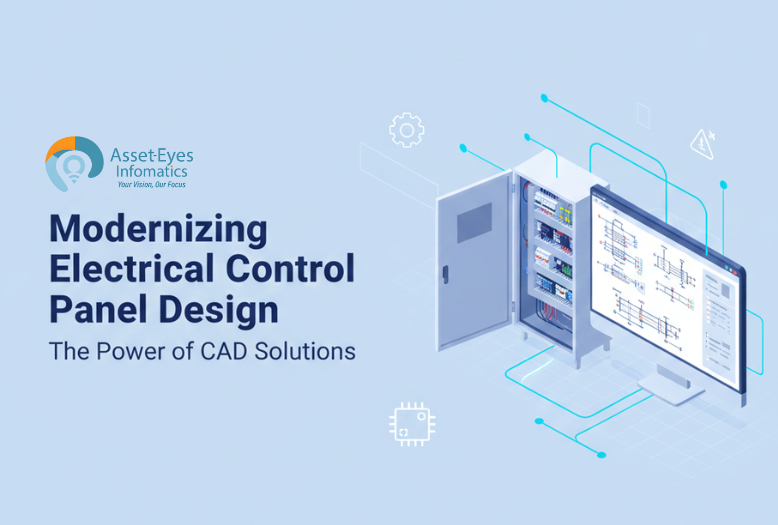
Electrical control panels play a critical role in modern industries. They act as the brain of machines, systems, and automation processes. From manufacturing plants and power stations to commercial buildings and infrastructure projects, electrical control panel design ensure that electrical systems operate safely and efficiently.
However, the way control panels are designed has changed significantly over the years. Traditional design methods, which relied heavily on manual drawings and calculations, are gradually being replaced by advanced Computer Aided Design (CAD) solutions. These modern tools are transforming how engineers and designers create, modify, and manage electrical panel designs. In this article, we will explore how CAD solutions are modernizing electrical control panel design, why this shift is important, and how businesses benefit from adopting these technologies.
Understanding Electrical Control Panel Design
Before diving into CAD solutions, it is important to understand what electrical control panel design involves.
An electrical control panel is an enclosure that contains electrical components such as circuit breakers, relays, contactors, PLCs (Programmable Logic Controllers), terminals, and wiring. These components work together to control and protect electrical equipment.
Designing a control panel is not just about placing components inside a box. It involves:
• Selecting the right components
• Planning the layout
• Designing wiring diagrams
• Ensuring safety standards
• Managing heat and ventilation
• Creating documentation
A well designed control panel improves system reliability, reduces maintenance issues, and enhances safety.
Traditional Control Panel Design Challenges
In the past, control panel design was mostly done using manual drafting or basic drawing tools. While this approach worked, it came with several limitations.
Time Consuming Process: Manual drawings require significant effort. Every component, wire, and connection must be drawn carefully. Making changes can be slow and frustrating.
Higher Risk of Errors: Human errors are common in manual design. Even small mistakes in wiring diagrams or layouts can lead to costly problems during manufacturing or installation.
Limited Flexibility: Modifying designs manually is difficult. Designers often need to redraw large portions of the panel layout when changes occur.
Documentation Issues: Keeping track of design versions, updates, and revisions can be challenging without digital tools.
Lack of Standardization: Ensuring consistency across multiple projects is difficult when designs are created manually.
These challenges pushed the industry toward more efficient and accurate solutions leading to the adoption of CAD technologies.
What is CAD in Electrical Panel Design?
Computer Aided Design (CAD) refers to software tools that help engineers and designers create detailed digital drawings and models.
In electrical control panel design, CAD software allows designers to:
• Create schematic diagrams
• Design panel layouts
• Plan wiring systems
• Generate reports and documentation
• Simulate electrical behavior
Instead of working on paper, designers work in a digital environment where changes can be made quickly and accurately.
How CAD Solutions Modernize Control Panel Design
Improved Accuracy and Precision
One of the biggest advantages of CAD software is accuracy.
CAD tools allow designers to work with precise measurements. Components are placed in the correct positions. Wiring paths can be defined clearly. This reduces errors and improves the quality of the final design.
With built in libraries of electrical components, designers can select standardized parts without guessing dimensions or specifications.
Faster Design Process
1. Speed is another major benefit.
CAD solutions significantly reduce design time. Designers can drag and drop components, reuse templates, and automate repetitive tasks.
Changes that once required hours of manual redrawing can now be completed in minutes. This helps businesses complete projects faster and meet tight deadlines.
2. Easy Design Modifications
Design changes are common in real world projects.
With CAD software, updating a panel design is simple. Designers can modify layouts, replace components, or update wiring diagrams without starting from scratch.
This flexibility is especially valuable when dealing with evolving customer requirements.
3. Better Visualization
CAD tools provide a clear visual representation of the panel.
Designers can view the panel layout in 2D or even 3D formats. This helps engineers, clients, and technicians understand the design more easily.
Better visualization improves communication and reduces misunderstandings.
4. Enhanced Standardization
Modern CAD solutions support standardization.
Companies can create design templates, component libraries, and design rules. This ensures consistency across multiple projects.
Standardized designs improve efficiency, reduce errors, and simplify maintenance.
5. Automated Documentation
Documentation is a critical part of control panel design.
CAD software can automatically generate:
• Bill of Materials (BOM)
• Wiring lists
• Terminal diagrams
• Cable reports
• Labels
This saves time and ensures accurate records.
6. Improved Collaboration
Control panel design often involves multiple teams.
CAD tools enable better collaboration between designers, engineers, manufacturers, and clients. Files can be shared digitally, reviewed remotely, and updated easily.
This improves workflow efficiency and reduces delays.
7. Better Compliance with Standards
Electrical designs must follow safety and industry standards.
Many CAD solutions include built in compliance checks. They help ensure that designs meet regulations related to spacing, wiring, grounding, and protection.
This reduces risks and improves safety.
8. Simulation and Testing Capabilities
Advanced CAD tools offer simulation features.
Designers can analyze electrical behavior, load conditions, and potential issues before manufacturing. This helps identify problems early and reduces costly corrections.
Cost Savings and Efficiency
While CAD software requires investment, it often leads to long term cost savings.
- Reduced Errors: Fewer design mistakes mean fewer production issues and rework costs.
- Faster Project Completion: Shorter design cycles improve productivity.
- Optimized Material Usage: Better planning reduces material waste.
- Improved Quality: High quality designs reduce maintenance and repair expenses.
CAD based control panel design is widely used across industries.
- Manufacturing: Automation panels, machine control systems, motor control centers.
- Energy and Power: Distribution panels, switchgear systems, renewable energy controls.
- Building Management: HVAC controls, lighting panels, security systems.
- Oil and Gas: Hazardous area panels, monitoring systems.
- Infrastructure: Traffic control systems, utility control panels.
Almost every sector that uses electrical systems benefits from modern CAD solutions.
Future Trends in CAD and Panel Design
The evolution of CAD technologies continues.
3D Panel Design: More companies are adopting 3D modeling for better visualization and spatial planning.
Digital Twins: Virtual replicas of control panels allow real time monitoring and simulation.
Cloud Based CAD: Designers can access tools and files from anywhere.
AI-Assisted Design: Artificial intelligence helps automate complex design decisions.
Integration with Manufacturing: CAD designs connect directly with CNC machines and automated production systems.
These trends indicate that digital design tools will become even more powerful and essential.
Why Businesses Should Adopt CAD Solutions
Modern businesses operate in a highly competitive environment.
Customers expect faster delivery, higher quality, and reliable systems. Manual design methods struggle to meet these demands.
CAD solutions provide:
• Speed
• Accuracy
• Flexibility
• Scalability
• Professional documentation
Adopting CAD is not just a technological upgrade, it is a strategic business decision.
How Asset Eyes Supports CAD Solutions for Electrical Control Panels
Modern electrical systems and industrial projects demand precision, clarity, and efficiency. Designing electrical control panels and associated systems using CAD tools is no longer optional; it is essential for accuracy, safety, and performance. This is where Asset Eyes plays a key role.
At Asset Eyes, we provide specialized CAD drawings services that help businesses design, document, and optimize electrical control panels and industrial systems with confidence.
Comprehensive CAD Drafting Services
Our team offers a wide range of CAD services, including:
- Mechanical General assembly drawing – Detailed layouts for electrical control panels and industrial systems.
- Electrical schematic diagrams – Clear wiring, connections, and circuit layouts.
- HVAC equipment design – Accurate designs for heating, ventilation, and air conditioning systems.
- Industrial ventilation system design – Optimized layouts for air flow, ducting, and exhaust systems.
- Industrial exhaust system design – Efficient exhaust and fume removal solutions for factories and plants.
- Evaporative cooling system design – CAD layouts for energy efficient cooling systems.
- HVAC CAD drafting – Professional CAD drawings for HVAC systems, including ducts, piping, and control panels.
Why Choose Asset Eyes?
• High accuracy CAD drafting
• Faster turnaround times
• Experienced technical expertise
• Cost effective solutions
• Standards compliant documentation
• Flexible design support
By combining technical knowledge with advanced CAD tools, Asset Eyes helps businesses build reliable, efficient, and future ready electrical control panel designs.
Conclusion
Electrical control panel design has come a long way. Traditional methods, while valuable in the past, cannot match the efficiency and precision of modern CAD solutions.CAD technologies are transforming how panels are designed, documented, and managed. They reduce errors, accelerate design cycles, improve collaboration, and enhance overall quality.
For companies involved in electrical engineering, automation, or industrial systems, embracing CAD solutions is becoming increasingly important.Modern design tools not only simplify the work of engineers but also create better, safer, and more reliable electrical systems. As technology continues to advance, CAD will remain a key driver in the modernization of electrical control panel design.
Contact us now:
📞 +91 9840895134