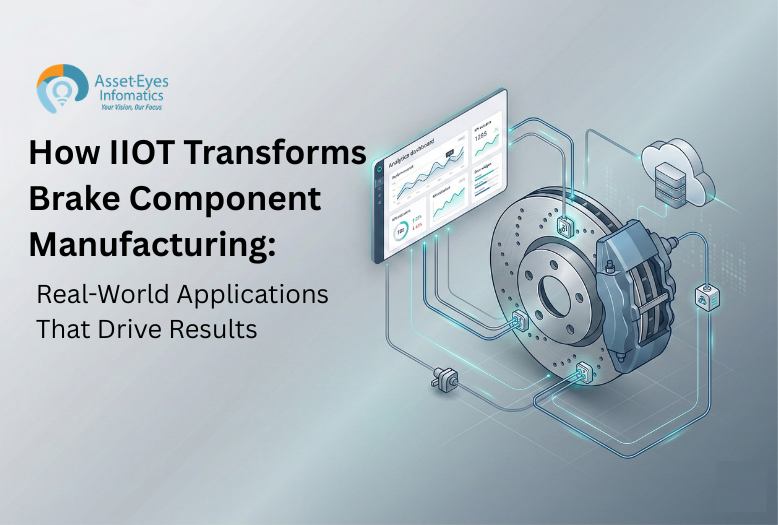
Picture this: It’s 3 AM on a Tuesday, and your brake caliper machining line just went down. The overnight shift is scrambling to diagnose the problem while finished vehicle assembly three plants away starts running low on critical components. By morning, you’re looking at thousands in lost production and potential line shutdowns across multiple facilities.This scenario plays out in automotive plants worldwide, but it doesn’t have to. The Industrial Internet of Things (IIoT) is transforming how component manufacturers monitor, maintain, and optimize their operations.
Let’s explore how IIoT technology works in practice, focusing on brake caliper production, a critical safety component that demands both precision and reliability.
1. The Brake Caliper Manufacturing Challenge – IIOT
Brake calipers represent one of the most demanding manufacturing environments in automotive production. These components require precise machining of bore diameters, mounting surfaces, and hydraulic passages. A single defective caliper can compromise vehicle safety, making quality control absolutely critical.
Traditional brake caliper manufacturing involves multiple stages: rough machining, precision boring, drilling of hydraulic passages, surface finishing, and final inspection. Each stage presents opportunities for quality issues, unexpected downtime, and efficiency losses that IIoT technology can address systematically.
2. Real-Time Production Monitoring: Beyond Basic Dashboards
Machine Performance Analytics
In a brake caliper machining cell, CNC machines operate continuously, removing material to create precise bore diameters and mounting surfaces. IIoT sensors capture critical data points:
- spindle load
- cutting forces
- tool wear indicators
- cycle times
When a boring tool begins wearing beyond optimal parameters, the system detects subtle changes in cutting force patterns and surface finish quality. Instead of waiting for dimensional drift or catastrophic tool failure, operators receive alerts that allow them to schedule tool changes during natural production breaks.
This predictive approach transforms maintenance from reactive firefighting into planned interventions. Your maintenance team knows exactly which machine needs attention, what parts to prepare, and when to schedule the work before quality or productivity suffers.
Quality Integration at the Source
Brake calipers must meet extremely tight tolerances for bore concentricity, surface finish, and hydraulic passage alignment. IIoT-enabled coordinate measuring machines (CMMs) and in-line gauges automatically capture dimensional data for every component produced.
The system compares measurements against specifications in real time, identifying trending issues before they result in scrap or rework. If bore diameters gradually increase across multiple calipers, the system flags this trend immediately. Investigation might reveal thermal expansion issues or progressive tool wear problems you can correct before producing out-of-specification parts.
Production Flow Optimization
Brake caliper production involves multiple workstations, and bottlenecks can occur anywhere in the process. IIoT sensors track each component’s progress using RFID tags or barcode scanning integrated with your manufacturing execution system.
Plant managers gain real time visibility into where each caliper is in the production process, how long it’s been at each station, and where delays occur. If the washing station becomes a bottleneck due to reduced flow rates, the system highlights this immediately. You can investigate whether perhaps filters need changing or pumps require maintenance and resolve issues before they impact daily production targets.
3. From Reactive to Proactive Maintenance
Vibration Analysis on Critical Equipment
The Machine: Horizontal Machining Center
A horizontal machining center performing brake caliper bore operations is a precision workhorse that runs nearly continuously. This machine houses a high-speed spindle rotating at thousands of RPM while boring tools cut precise cylinder chambers into cast iron caliper bodies. The spindle rides on precision bearings, while ball screws position the workpiece with micron-level accuracy. Every component must work flawlessly; a single failure can shut down the entire brake caliper production line.
The machine’s complexity creates multiple failure points: spindle bearings handle enormous rotational forces, ball screws endure thousands of positioning cycles daily, and the entire system operates under constant thermal and mechanical stress. When any critical component begins failing, the effects ripple through production quality and uptime.
How It Breaks
Spindle bearing failure follows a predictable but often invisible progression. Under constant high-speed rotation and cutting forces, microscopic surface irregularities develop on bearing races and balls. These tiny imperfections create specific vibration frequencies that grow stronger over weeks or months.
Initially, these vibrations are imperceptible to operators. The machine continues producing quality parts while the bearing slowly deteriorates. As wear progresses, the vibrations intensify and new frequency components appear. Eventually, the bearing reaches a critical point where catastrophic failure becomes imminent but by then, you’re looking at potential spindle seizure, damaged workpieces, and a complete spindle rebuild costing tens of thousands of dollars.
Ball screws degrade differently but just as predictably. The precision balls rolling in their grooves develop flat spots from repeated positioning cycles. Backlash increases gradually, reducing positioning accuracy until bore locations drift out of tolerance. Operators typically notice quality issues only after dozens or hundreds of calipers are already out of specification.
How We Detect It
IIoT vibration sensors mounted directly on the spindle housing continuously capture the machine’s vibration signature thousands of times per second. Advanced analytics software understands bearing failure patterns, recognizing specific frequency components that correspond to bearing race defects or ball wear long before human operators notice any changes.
The system tracks how quickly these frequency components grow, comparing current patterns against historical failure data. When analysis indicates a bearing will likely fail within two weeks, maintenance receives an alert with the predicted failure timeline and confidence level. This transforms maintenance from reactive firefighting into planned intervention.
Your maintenance team can now schedule bearing replacement during planned weekend maintenance, order correct parts in advance, and prepare specialized tools. The repair takes four hours during scheduled downtime instead of causing an unexpected 24-hour production halt that cascades through your entire supply chain.
For ball screw monitoring, the system analyzes positioning accuracy over thousands of cycles, detecting gradual increases in positioning error that indicate wear progression. Maintenance can schedule replacement before quality issues emerge, preventing scrap and rework costs.
Hydraulic System Monitoring
The System: Clamping and Positioning
The same machining center relies on hydraulic systems for clamping brake caliper castings securely and actuating positioning fixtures. These systems must maintain consistent pressure and flow to ensure repeatable part positioning and reliable cycle times. Even small variations in hydraulic performance can compromise part quality or create safety hazards.
The hydraulic circuit includes pumps, filters, valves, cylinders, and miles of high-pressure lines. Each component plays a critical role in maintaining the precise clamping forces needed to hold heavy caliper castings steady during aggressive machining operations.
How It Breaks
Hydraulic systems typically fail through gradual degradation rather than sudden catastrophic failure. Filters slowly accumulate contamination, forcing pumps to work harder and generating excess heat. System pressure gradually increases as flow restriction grows.
Seals throughout the system harden and crack over time, allowing internal and external leakage. Pressure drops become more noticeable during heavy cutting operations when maximum clamping force is most critical. Pumps themselves lose efficiency as internal components wear, leading to slower response times and inconsistent clamping.
Left unmonitored, these gradual changes eventually reach critical points. Parts may shift slightly during machining, causing dimensional errors or poor surface finish. In worst cases, sudden loss of clamping force can result in workpieces becoming projectiles damaging expensive equipment and creating serious safety hazards.
How We Detect It
IIoT pressure and flow sensors installed at strategic points throughout the hydraulic circuit provide continuous monitoring of system health. These sensors track pressure, flow rate, and temperature during every clamping cycle, comparing actual performance against established baselines.
The system recognizes specific degradation patterns:
- Gradual pressure increases at constant flow rates typically indicate filter clogging. The system alerts maintenance to schedule filter replacement before complete blockage occurs.
- Slow pressure drops under load suggest seal wear or internal pump leakage. Early detection allows seal replacement during planned maintenance rather than emergency repairs.
- Irregular pressure spikes may signal valve sticking or pump cavitation, indicating need for component inspection or fluid analysis.
Temperature monitoring adds another diagnostic layer, detecting pumps running hot due to increased internal friction or system overwork. By correlating pressure trends with cycle counts and operating hours, the system predicts when filters need changing, seals require replacement, or pumps need service.
This proactive approach prevents both subtle quality problems and workpieces shifting during cuts due to inadequate clamping and catastrophic failures that could damage expensive brake caliper castings or endanger operators. Maintenance receives specific alerts with enough lead time to plan interventions during scheduled downtime, keeping production running smoothly while protecting both equipment and product quality.
4. Implementation Strategy: A Practical Approach
Phase 1: Assessment and Foundation (Months 1-2)
Begin with comprehensive documentation review and updates. Many plants operate with outdated electrical schematics and mechanical drawings. Before adding IIoT components, ensure your EPLAN electrical drawings and general assembly drawing packages accurately reflect current conditions.
Audit existing PLCs, networks, and communication capabilities. Identify which machines can integrate easily and which require infrastructure upgrades. This assessment prevents costly surprises during implementation.
Phase 2: Pilot Implementation (Months 3-4)
Select one critical machining cell for initial IIoT deployment. Focus on the most impactful metrics: machine availability, quality trends, and energy consumption. Install sensors for vibration monitoring, temperature tracking, and basic production counting.
Validate data accuracy and establish baseline performance metrics. Train operators and maintenance staff on new interfaces and alert procedures. Use this period to refine communication protocols and reporting structures.
Phase 3: Expansion and Integration (Months 5-8)
Extend IIoT capabilities to additional machines and processes. Add quality measurement integration, advanced analytics, and predictive maintenance algorithms. Connect IIoT data with existing ERP and maintenance management systems.
Develop standard operating procedures for responding to different alert types. Establish key performance indicators that demonstrate IIoT value: reduced unplanned downtime, improved first-pass yield, and lower maintenance costs.
Phase 4: Optimization and Scaling (Months 9-12)
Implement advanced analytics and machine learning algorithms that can identify complex patterns in your data. Extend successful implementations to other production lines and facilities using standardized designs and procedures.
6. How Asset-Eyes Enables IIoT Success
Asset-Eyes supports your IIoT journey through comprehensive engineering services that ensure reliable, scalable implementations. Our CAD drafting service creates accurate as-built documentation that IIoT integrators need for efficient project execution.
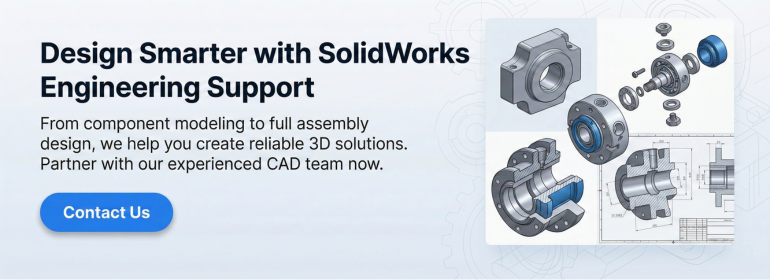
We provide electrical control panel design expertise to accommodate new IIoT hardware without compromising existing system reliability. Our SolidWorks design capabilities enable custom mounting solutions and mechanical modifications that protect your equipment investment while enabling advanced monitoring.
IIoT technology offers tremendous potential for improving brake caliper manufacturing and automotive component production generally. Real-time monitoring, predictive maintenance, and quality integration can significantly reduce costs while improving reliability.
However, successful IIoT implementation requires more than just software and sensors. It demands accurate documentation, thoughtful electrical design, and careful mechanical integration. When these fundamentals are solid, IIoT projects deliver measurable results: reduced downtime, improved quality, and lower operating costs.
If you’re planning an IIoT implementation and want to ensure your documentation and design infrastructure can support it effectively, that’s exactly where we can help.
Contact Us Now:
📞 +91 9840895134
FAQs
Brake caliper manufacturing combines extremely tight precision requirements with multi-stage production processes and severe downtime consequences. These safety-critical components require exact bore diameters, surface finishes, and hydraulic passages where single defects can compromise vehicle safety. The traditional multi-stage process involving rough machining, precision boring, hydraulic passage drilling, and final inspection creates multiple failure points that IIoT can monitor systematically, preventing quality issues and unexpected downtime before they cascade through automotive supply chains.
IIoT sensors continuously monitor spindle load, cutting forces, and tool wear indicators during machining operations. When boring tools begin wearing beyond optimal parameters, systems detect subtle changes in cutting force patterns and surface finish quality before dimensional drift occurs. Instead of waiting for catastrophic tool failure or discovering quality issues after producing defective calipers, operators receive predictive alerts enabling scheduled tool changes during natural production breaks, transforming emergency troubleshooting into planned maintenance interventions.
IIoT vibration sensors mounted on spindle housings capture vibration signatures thousands of times per second, detecting specific frequency components corresponding to bearing race defects long before human operators notice changes. Spindle bearing failure follows predictable progression where microscopic surface irregularities create growing vibration frequencies over weeks. When analysis predicts bearing failure within two weeks, maintenance receives alerts enabling four-hour planned weekend replacements instead of unexpected 24-hour production halts that cascade through supply chains.
IIoT pressure and flow sensors detect four critical degradation patterns: gradual pressure increases at constant flow indicating filter clogging, slow pressure drops under load suggesting seal wear or pump leakage, irregular pressure spikes signaling valve sticking or cavitation, and temperature anomalies indicating pump overwork. By correlating these trends with cycle counts and operating hours, systems predict maintenance needs before subtle quality problems like workpiece shifting during cuts or catastrophic clamping failures that endanger operators.
IIoT-enabled coordinate measuring machines and in-line gauges automatically capture dimensional data for every component, comparing measurements against specifications in real-time. When bore diameters gradually increase across multiple calipers, systems immediately flag trending issues for investigation of thermal expansion or progressive tool wear. This approach catches quality drift before dozens of out-of-specification safety-critical components are produced, significantly reducing scrap costs and preventing defective parts from reaching vehicle assembly plants.
IIoT tracks each brake caliper through production using RFID tags or barcode scanning integrated with manufacturing execution systems. Plant managers gain real-time visibility into component location, station dwell times, and delay patterns throughout the production process. When washing stations become bottlenecks due to reduced flow rates, systems highlight issues immediately for investigation of filter changes or pump maintenance requirements, enabling resolution before daily production targets are compromised and downstream assembly plants experience component shortages.
The four-phase roadmap spans twelve months: Phase 1 (months 1-2) involves comprehensive documentation review and infrastructure assessment, updating EPLAN electrical drawings and auditing existing PLCs to prevent implementation surprises. Phase 2 (months 3-4) deploys pilots on critical machining cells, validating data accuracy and training staff. Phase 3 (months 5-8) expands capabilities across machines while integrating with ERP and maintenance systems. Phase 4 (months 9-12) implements machine learning algorithms and scales successful approaches using standardized procedures.
Accurate documentation is essential because IIoT integrators rely on precise electrical schematics and mechanical drawings to understand existing infrastructure, identify integration points, and plan sensor placement. Many plants operate with outdated documentation that doesn’t reflect current conditions. Beginning IIoT deployment without updated EPLAN electrical drawings and general assembly packages risks discovering infrastructure incompatibilities mid-implementation, causing expensive delays and rework when sensors and networks don’t align with actual equipment configurations and communication capabilities.
IIoT transforms maintenance by providing advance failure predictions with specific timelines and confidence levels. Instead of scrambling during 3 AM breakdowns when machining lines fail unexpectedly, maintenance teams receive alerts specifying which machine needs attention, required replacement parts, and optimal intervention timing. For ball screw monitoring, systems analyze positioning accuracy across thousands of cycles, detecting gradual error increases before quality issues emerge. This predictability enables scheduling repairs during planned downtime with proper parts and tools prepared.
Asset-Eyes supports IIoT implementations through comprehensive engineering services addressing foundational requirements that determine project success. Their CAD drafting services create accurate as-built documentation that integrators need for efficient execution, while electrical control panel design expertise accommodates new IIoT hardware without compromising existing system reliability. SolidWorks design capabilities enable custom sensor mounting and mechanical modifications. Asset-Eyes addresses documentation and design infrastructure requirements that determine whether IIoT projects deliver measurable results including reduced downtime, improved quality, and lower operating costs.