Your engineering team just spent six months designing what you believe is a breakthrough feature for your industrial equipment line. The lab testing looks promising. Customer focus groups said they’d love it. Your product managers are excited. Then the machines ship, get installed, and start running in actual production environments. Three months later you discover – that brilliant new feature? Customers are barely using it. Meanwhile, a function you almost cut from the design to save costs is being pushed to its absolute limits every single shift. If this sounds familiar, you’re not alone. Most manufacturers think of “competitive intelligence” as something that comes from analyst reports, customer surveys, and what the sales team hears in the field.
But there’s another source of market insight that many companies are sitting on without really using: the machines you’ve already deployed.
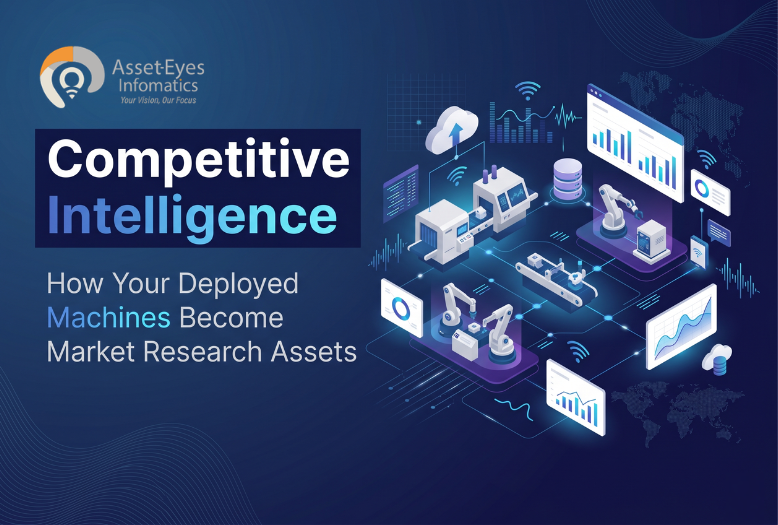
When your equipment is connected through Industrial Internet of Things (IIoT) sensors, every installed machine becomes a continuous research asset, generating real-world evidence about how customers actually use your products, which features matter and which are ignored, where performance bottlenecks occur in the field, and how different environments stress your designs.
This isn’t theoretical. It’s happening now, and it’s creating significant competitive intelligence advantages for manufacturers who implement it thoughtfully.
1. What Lab Testing Misses (That the Field Reveals Instantly)
Lab and factory tests are essential for compliance and basic validation. But even the best test plans are built on assumptions about typical duty cycles, expected environments, “normal” operator behavior, and reasonable overload ranges.
Real customers have a way of ignoring those assumptions.
Your test environment runs equipment at steady state with clean power, controlled temperatures, and maintenance performed exactly on schedule. Real customer facilities? Not so much. They deal with voltage fluctuations, ambient temperature swings of 40+ degrees between seasons, deferred maintenance when production schedules get tight, operator variations in how controls are used, and integration challenges with other equipment that wasn’t part of your test setup.
Here’s what real-world IIoT data often reveals that lab testing simply cannot:
Actual Usage Patterns vs. “Intended” Usage
You might design a solution with five operating modes because customer interviews suggested they needed that flexibility. Field data shows 87% of runtime happens in just two modes. The other three modes add cost and complexity that most customers never use but you’re still engineering, manufacturing, and supporting them.
Or the opposite: a feature you considered secondary is being used far more intensively than anticipated, revealing an unmet market need you can expand on.
Performance Bottlenecks Under Real Conditions
Lab testing showed your HVAC CAD drafting could handle the specified airflow at the rated pressure drop. Field data reveals that in actual installations with real ductwork configurations, the system is working harder than expected because installation practices create resistance your models didn’t account for.
For companies doing electrical control panel design, you might discover that panels consistently overheat in non-air-conditioned plants during summer months, even though they passed thermal testing in controlled conditions.
Feature Utilization: What Customers Actually Value
Data might reveal that a machine rated for 100 units per minute is consistently being run at 110, causing premature wear on bearings. Or you might find that a complex automated sequence you spent weeks coding is being bypassed entirely in favor of manual mode.
This insight allows you to lean out your development process instead of wasting resources on unused features, you can double down on making the core functions the ones used every hour of every day more robust and intuitive.
2. Turning Field Intelligence Into Competitive Advantage – Competitive Intelligence
Manufacturers who systematically collect and act on field performance data create a reinforcing competitive intelligence advantage that compounds over time.
Faster Problem Identification
Instead of waiting for warranty claims or customer complaints, you detect performance anomalies as they develop. A bearing showing elevated vibration signatures. A control system experiencing more faults than expected. Thermal management issues appearing in hot climate installations.
By monitoring temperature sensors within electrical enclosures or tracking current draw on VFDs, you can see if your thermal management strategy is holding up in real-world conditions. Early detection means you can address problems proactively, sometimes remotely, before the customer even notices an issue.
Data-Driven Product Development
Every product generation becomes smarter because you’re designing based on actual field performance rather than assumptions. You know which features customers value because you see which ones they use and which components need strengthening because you see where failures occur.
When field data indicates that a specific sensor mount vibrates loose after 5,000 cycles, that information goes straight to your CAD drafting team. They can update the SolidWorks design to add ribbing or change the mounting geometry for all future builds.
Similarly, if maintenance teams consistently struggle to access a specific contactor, that feedback should trigger a revision in your EPLAN control panel design. The next version rolls out with a layout that prioritizes serviceability, solving a problem before the next customer encounters it.
Predictive Service Models
Field performance data enables you to move from reactive to predictive service. This creates new revenue opportunities through service contracts while simultaneously improving customer satisfaction and equipment uptime.
When you can tell a customer “our data shows you should replace this component in the next two weeks to avoid an unplanned outage,” you’re delivering value that competitors relying on fixed maintenance schedules simply cannot match.
Market Intelligence That Drives Strategy
Aggregate field data reveals the latest market trends and application patterns. You see which industries are pushing equipment hardest, which geographic regions show different usage patterns, and which customer segments might benefit from specialized variants.
3. Designing Data Collection Architectures That Actually Work
The gap between “collecting data” and “generating actionable intelligence” is where many IIoT initiatives fail. Manufacturers install sensors, create dashboards, and generate reports but struggle to translate raw data into engineering decisions that improve products.
The challenge is designing data collection architectures that serve engineering needs, not just IT requirements.
This means thinking carefully about which parameters to measure, how frequently to sample them, how to structure data for analysis, and how to route insights back to product development teams.
Critical Design Considerations
Your data architecture needs to balance comprehensive data collection with practical limitations. You want enough information to understand equipment behavior, but excessive data collection creates storage costs and analysis complexity.
Effective architectures typically include edge processing to reduce data transmission requirements, standardized data models that work across product lines, automated anomaly detection to flag issues requiring engineering attention, and integration with existing product lifecycle management systems.
The goal isn’t just collecting data, it’s creating feedback loops where field intelligence automatically informs design reviews, reliability analysis, and product roadmap decisions.
From Reactive to Proactive Development
Traditional product development is inherently reactive. You design based on requirements, launch, wait for field feedback through warranty claims and customer complaints, then incorporate learnings into the next generation. This cycle takes years.
With systematic field data collection, you’re continuously learning from deployed equipment. Product improvements become evolutionary rather than revolutionary, with each generation incorporating real-world learnings from thousands of operating hours across diverse applications.
4. How Asset-Eyes Supports Field Intelligence Initiatives – Competitive Intelligence
At Asset-Eyes, we understand that collecting field data is only valuable if it translates into better engineering decisions. Our expertise in CAD drawings services and SolidWorks design extends to designing data collection architectures that support continuous product improvement.
We work with manufacturers to identify which performance parameters drive product development decisions, design sensor integration strategies that work with existing workflows, create data visualization systems that make field intelligence accessible to engineering teams, and establish feedback loops connecting field performance to design reviews.
Whether you’re working on cad drafting service, HVAC equipment design, industrial ventilation system design, electrical control panel design, industrial exhaust system design, or custom machinery, we help you transform deployed equipment from static assets into continuous sources of competitive intelligence.
Our approach recognizes that every manufacturer’s products and development processes are different. We don’t implement generic IIoT solutions, we design data collection architectures tailored to your specific products, customer applications, and engineering workflows.
We help ensure your electrical drawings and mechanical general assembly drawing documentation can accommodate the necessary sensors and gateways to capture vital intelligence. When field data indicates design improvements, we help update your documentation to reflect those changes, ensuring your engineering records keep pace with your innovation.
5. The Strategic Reality: Your Machines Are Already Talking
The manufacturers who will lead their industries five years from now aren’t necessarily those with the biggest R&D budgets or the most advanced lab facilities. They’re the ones who most effectively learn from equipment already operating in customer facilities.
Every machine you’ve deployed represents an opportunity to understand real-world performance, validate design assumptions, and identify improvement opportunities. The question is whether you’re systematically capturing that intelligence or leaving it untapped.
Your machines are out there talking. The question is whether your engineering team is listening and whether you’re turning those conversations into competitive intelligence advantages that compound over time.
Contact Us Now:
📞 +91 9840895134
FAQs
Traditional lab testing fails to predict real-world performance because it relies on controlled environments with clean power, steady temperatures, and scheduled maintenance. Customer facilities introduce unpredictable variables like voltage fluctuations, ambient temperature swings of 40+ degrees between seasons, deferred maintenance during tight production schedules, and operator variations that even the most rigorous controlled test plans cannot replicate or anticipate.
Deployed machines connected through IIoT sensors become continuous research assets by generating real-world evidence about actual customer usage patterns, feature utilization, and performance bottlenecks. Rather than waiting for warranty claims or customer surveys, manufacturers receive ongoing data streams from every installed unit, creating a compounding competitive advantage where each product generation is designed based on thousands of operating hours of real field performance.
IIoT field data frequently reveals significant gaps between intended and actual usage patterns. For example, equipment designed with five operating modes may show that 87% of runtime occurs in just two modes, meaning three modes add unnecessary cost and complexity. Conversely, secondary features may be used far more intensively than anticipated, revealing unmet market needs that manufacturers can expand upon.
Field intelligence transforms product development from reactive to evolutionary by continuously feeding real-world learnings back into the design process. When field data identifies a specific sensor mount vibrating loose after 5,000 cycles, that information goes directly to CAD drafting teams to update SolidWorks designs. Similarly, if maintenance teams consistently struggle to access a contactor, that feedback triggers EPLAN control panel layout revisions before the next customer encounters the problem.
Predictive service enabled by field performance data significantly outperforms fixed maintenance schedules by delivering proactive, data-driven recommendations. Instead of servicing equipment on predetermined calendars, manufacturers can alert customers to replace specific components within defined windows to avoid unplanned outages. This capability creates new revenue opportunities through service contracts while improving equipment uptime and customer satisfaction in ways that competitors cannot match.
Successful IIoT data collection architectures require balancing comprehensive data gathering with practical limitations to avoid excessive storage costs. Effective setups need edge processing to reduce transmission requirements, standardized data models across product lines, automated anomaly detection to flag engineering issues, and seamless integration with existing product lifecycle management systems to create feedback loops that inform design reviews and product roadmap decisions.
In real HVAC installations, field data often reveals that systems work much harder than anticipated because actual ductwork configurations and installation practices create unexpected resistance. Equipment rated for specific airflow at rated pressure drops may struggle in real installations, exposing integration challenges that controlled laboratory thermal testing completely failed to account for, leading to premature wear and efficiency losses.
Field data enables proactive development by providing continuous feedback from deployed equipment instead of waiting years for warranty claims and complaints. Engineers can identify emerging patterns across thousands of operating hours and diverse applications, then incorporate incremental design improvements into the next builds. This transforms development from a years-long reactive cycle into an evolutionary process where products are constantly refined based on real-world behavior.
Asset-Eyes helps manufacturers design tailored data collection architectures that connect field performance directly to engineering workflows. Their expertise in CAD drawing services and SolidWorks design extends to identifying critical performance parameters, designing sensor integration strategies, and creating data visualization systems accessible to engineering teams. They also ensure electrical drawings and general assembly documentation accommodate necessary sensors and gateways while updating engineering records when field data indicates design improvements.
Asset-Eyes differentiates itself by avoiding one-size-fits-all IIoT deployments and instead tailoring architectures to each manufacturer’s specific products, applications, and engineering processes. They leverage expertise in HVAC equipment design, industrial ventilation systems, electrical control panels, and custom machinery to ensure field intelligence integrates seamlessly with existing workflows. This customized approach ensures data is consistently translated into updated designs, improved serviceability, and living engineering records.