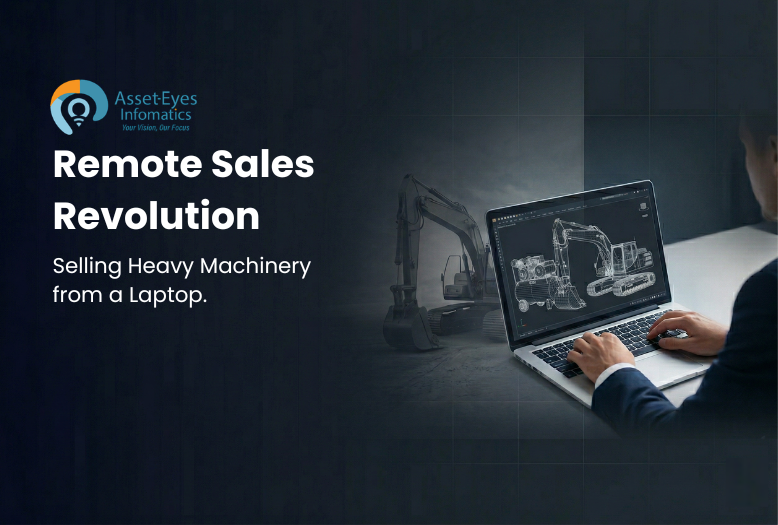
Your sales engineer just spent three days coordinating a product demonstration. The 15-ton industrial compressor had to be transported 800 miles to the client’s facility. Installation took another full day. The demo itself lasted two hours. Then came the logistics nightmare of getting everything back to your warehouse. This is exactly where the Remote Sales Revolution is changing the game helping businesses showcase complex, heavy machinery without the cost, time, and operational burden of physical demos, while still delivering an impactful sales experience.
Total cost? Somewhere north of $25,000 when you factor in transport, labor, equipment rental for loading, insurance, and lost productivity. And here’s the painful part: the prospect still wasn’t entirely sure about the internal valve configuration and asked for another meeting to discuss customization options.
This scenario plays out daily across industrial equipment sales. But what if your prospect could inspect every bolt, rotate the equipment 360 degrees, zoom into the motor control panel design, and even see inside the housing all from their conference room? What if you could demonstrate five different configurations in the time it used to take just to unload one machine from the truck?
That’s not a future scenario. It’s happening now through interactive 3D visualization, and it’s fundamentally changing how machine design companies sell complex equipment.
1. The Real Cost of Traditional Heavy Equipment Sales – Remote Sales
Let’s talk numbers, because the economics of traditional industrial sales are often more demanding than they first seem.
Trade Shows: The $50,000 Gamble
Industry data shows that exhibiting at a B2B tech trade show costs between $10,000 and over $1 million depending on booth size and location, with most mid sized exhibitors spending $50,000 to $150,000 per event. That includes booth space rental, design and construction, shipping heavy equipment to the venue, on-site labor and setup, travel and accommodation for your team, and promotional materials.
What do you gain from that investment? Three days of access to attendees who are simultaneously being courted by dozens of competitors, a few hundred business cards that may or may not convert, and the logistical headache of getting your equipment back intact.
The real problem isn’t just the cost, it’s the limitation. You can only display a fraction of your product line. You can’t show internal components without disassembling equipment on the show floor. When someone asks about your HVAC equipment design capabilities or industrial ventilation system design options, you’re stuck pointing at static displays and saying “imagine this, but configured differently.”
On-Site Demonstrations: Logistics Nightmares
When a serious prospect requests an on-site demonstration, the complexity multiplies exponentially. Heavy machinery doesn’t fit in a sales rep’s trunk. You’re dealing with specialized transport, crane rentals for loading and unloading, insurance for high value equipment in transit, and coordination with the client’s facility for receiving and setup.
For manufacturers specializing in electrical control panel design or custom SolidWorks design solutions, every demonstration becomes a mini construction project. One machinery manufacturer reported that their average on-site demo cost exceeded $18,000 when all factors were included before anyone discussed whether the prospect would actually buy.
2. Why Video Calls and PDFs Aren’t Enough for Complex Machines
Most teams tried to “go digital” during the pandemic by shifting to PowerPoint decks, product brochures with general assembly drawings, recorded walkaround videos, and live video calls from the shop floor.
These methods are better than nothing, but they break down fast when buyers want to compare different configurations, understand internal components and motion sequences, see clearances and maintenance access points, or visualize how the machine fits into their existing facility layout.
The fundamental problem is cognitive load. Understanding complex mechanical systems from 2D drawings requires significant technical expertise and spatial reasoning. Your team’s CAD drafting service produces accurate technical drawings, but expecting a busy procurement manager to mentally translate those into three dimensional understanding is asking too much.
Even when you provide outputs with multiple views front, side, top, isometric the prospect still can’t see what they really need: how components interact during operation, what the equipment looks like from the operator’s position, or how it integrates with their specific workflow.
3. Interactive 3D Models: The Showroom in Every Boardroom -Remote Sales
Here’s where the revolution happens. Instead of forcing prospects to come to your machine, you make the machine come to them on a laptop, tablet, or smartphone.
What “Selling from a Laptop” Actually Looks Like – Remote Sales
In a modern remote sales workflow, you can launch an interactive 3D model in a browser during a sales call, let the buyer rotate, zoom, and inspect the machine from any angle, toggle between different options and configurations instantly, hide or explode subassemblies to show internal components, animate operation sequences and material flow patterns, and drop the machine into a virtual factory layout for context.
All this happens without shipping a single crate or clearing space in your yard.
The Psychology of Hands-On Exploration
There’s a crucial psychological dimension here. When prospects can manipulate and explore a 3D model themselves, they develop a sense of ownership and understanding that passive viewing never creates. It’s the difference between watching someone drive a car versus sitting in the driver’s seat yourself.
For complex systems, this hands on exploration helps prospects build accurate mental models of how your solution works. They can answer their own questions by exploring the model, which means fewer back and forth emails and faster progression through the sales cycle.
4. Real World Applications Across Industrial Sectors – Remote Sales
HVAC and Industrial Ventilation
Companies specializing in HVAC CAD drafting and evaporative cooling system design deal with systems that are inherently difficult to demonstrate. The equipment is large, installations are custom, and much of the value is in airflow performance that’s invisible to the eye.
Interactive 3D models can show system layouts in actual facility contexts, demonstrate airflow patterns through animated overlays, allow prospects to configure ductwork routing for their specific building, and compare energy performance across different specifications.
Custom Machinery and Equipment – Remote Sales
For companies operating as a machine design company, every sale involves customization. Traditional processes require multiple rounds of drawings and revisions before prospects can visualize the final solution.
With interactive 3D, you can show a base model and modify it in real time during sales conversations. Add an optional conveyor, change motor specifications, adjust frame dimensions and the prospect sees changes immediately in three dimensions.
Electrical and Control Systems
EPLAN services and EPLAN control panel design work produces detailed electrical schematics that are notoriously difficult for non electrical engineers to interpret. An interactive 3D model of a control panel can show physical layout and component placement, demonstrate how doors open and components are accessed, display wiring routes in three dimensions, and link electrical schematics to physical components.
Implementation: From CAD to Client
The process is more straightforward than you might expect, especially if you already have robust CAD drawing service and engineering documentation.
Starting With Existing Engineering Data
The foundation is your existing 3D CAD models. When you already have detailed 3D representations, the challenge isn’t creating models; it’s making them accessible and interactive for non-technical users.
This involves optimizing 3D models for web delivery, adding interactive hotspots and annotations, creating configuration options prospects can toggle, and embedding technical specifications and documentation.
Integration With Sales Processes
The most successful implementations integrate interactive 3D into existing workflows rather than treating it as a separate tool. This might include embedding 3D viewers in website product pages, sending prospects custom links to configured models during sales conversations, using interactive models during virtual presentations, or providing QR codes at trade shows linking to full 3D experiences.
How Asset-Eyes Transforms Engineering Data Into Sales Tools – Remote Sales
This is where Asset-Eyes makes the difference between having 3D models and having effective sales tools.
Asset-Eyes specializes in taking existing engineering data CAD models, SolidWorks assemblies, general assembly drawings, EPLAN electrical drawings and transforming them into interactive 3D experiences optimized for sales use.
The process starts with your current engineering files. Asset-Eyes’ team understands industrial equipment and machine design principles, which means they can intelligently optimize models without losing technical accuracy. They know which details matter to prospects and which can be simplified for better performance.
Asset-Eyes creates interactive models that work seamlessly across devices desktop computers, tablets, and smartphones without requiring prospects to download special software. The models load in standard web browsers, making them as easy to share as sending a link.
For companies with complex product lines involving HVAC equipment design, industrial exhaust system design, or motor control panel design, Asset-Eyes can build configurators that let prospects customize specifications and see changes in real time. This turns your engineering flexibility into a competitive sales advantage.
The models include animated sequences showing assembly or operational cycles, exploded views revealing internal components, embedded documentation accessible through the 3D interface, and integration with existing product databases.
What makes Asset-Eyes particularly valuable is their understanding of both technical requirements and sales context. They’re not creating pretty visualizations, they’re building tools that help your sales team close deals more efficiently.
The Competitive Reality: Adapt or Fall Behind
Your competitors are already exploring these capabilities. The industrial equipment companies that adopt interactive 3D visualization first will establish significant competitive advantages in prospect engagement and sales efficiency.
Prospects increasingly expect digital first experiences. They want to research thoroughly before engaging with sales teams. They want hands on understanding without committing to on-site demonstrations.
Companies that deliver these experiences will win more deals, shorten sales cycles, and operate more efficiently. Those relying exclusively on trade shows, static brochures, and expensive on-site demos will find themselves at a growing disadvantage.
The technology is mature. The costs are reasonable. The business case is clear. The question isn’t whether interactive 3D visualization will become standard, it’s whether your company will be an early adopter or a late follower.
Moving Forward
The future of industrial equipment sales isn’t about shipping more machines to more trade shows. It’s about leveraging the 3D engineering data you already have to create experiences that help prospects understand, configure, and confidently purchase complex equipment from anywhere, at any time.
If you’re ready to explore how your CAD outputs and engineering documentation can become powerful sales tools, Asset-Eyes can help you map that journey and bring your showroom to every prospect’s boardroom.
Contact Us Now:
📞 +91 9840895134
FAQs
Traditional heavy equipment sales carry enormous hidden costs that make current approaches economically unsustainable. On-site demonstrations for heavy machinery typically cost $18,000-$25,000 per event when factoring in specialized transport, crane rentals for loading and unloading, insurance for high-value equipment in transit, facility coordination for receiving and setup, and the logistics nightmare of returning equipment intact. Trade show participation compounds these costs, with mid-sized exhibitors spending $50,000-$150,000 per event including booth space rental, construction, equipment shipping, on-site labor, team travel, and promotional materials. The painful reality is that these massive investments provide only limited access to prospects who are simultaneously being courted by dozens of competitors, often resulting in just a few hundred business cards with uncertain conversion potential.
Video calls and PDF presentations break down because they create excessive cognitive load for buyers who lack the technical expertise to mentally translate 2D drawings into three-dimensional understanding. The fundamental problem is neurological—understanding complex mechanical systems from flat drawings requires significant spatial reasoning skills that most procurement managers and facility directors don’t possess. Even comprehensive documentation including multiple views, general assembly drawings, and detailed CAD outputs cannot show how components interact during operation, reveal maintenance clearances, demonstrate internal mechanisms, or help prospects visualize equipment integration with their specific facility layouts. Busy decision-makers simply cannot build accurate mental models from static materials, leading to confusion, extended evaluation periods, and requests for costly physical demonstrations.
Interactive 3D visualization transforms remote sales by allowing prospects to explore complex equipment directly through standard web browsers without shipping physical machines. During sales calls, prospects can rotate equipment 360 degrees from any angle, zoom into specific components like motor control panels, toggle between different configurations instantly, hide or explode subassemblies to reveal internal components, animate operation sequences and material flow patterns, and drop virtual machines into facility layouts for spatial context. This transformation eliminates the traditional choice between expensive physical demonstrations and inadequate static presentations, creating a third option where prospects gain hands-on understanding from laptops, tablets, or smartphones without any specialized software downloads or installation requirements.
When prospects manipulate and explore 3D models themselves rather than watching passive presentations, they develop a genuine sense of ownership and understanding that passive viewing cannot create—analogous to the difference between watching someone drive a car versus sitting in the driver’s seat yourself. This hands-on exploration enables prospects to build accurate mental models of how equipment functions while answering their own questions through direct model manipulation. The psychological impact is profound: prospects gain confidence in their understanding, reduce dependency on sales explanations, and develop emotional investment in the solution. This results in fewer back-and-forth clarification emails, faster progression through sales cycles, and higher confidence levels when making significant capital equipment purchasing decisions.
HVAC and industrial ventilation equipment presents distinctive sales challenges because systems are large, installations are highly customized, and core value lies in airflow performance that remains invisible to the naked eye. Interactive 3D models solve these visualization problems by showing complete system layouts within actual facility contexts, demonstrating airflow patterns through animated overlays that make invisible performance visible, allowing prospects to configure ductwork routing for their specific building constraints and spatial limitations, and enabling real-time comparison of energy performance across different specifications and configurations. This transforms abstract engineering capabilities into concrete visual experiences that help non-technical decision-makers understand value propositions that static HVAC CAD drafting outputs simply cannot communicate effectively.
Electrical control panel designs produced through EPLAN services and sophisticated electrical engineering are notoriously difficult for non-electrical personnel to interpret from traditional schematic drawings. Interactive 3D models bridge this comprehension gap by showing physical component layout and placement within actual enclosures, demonstrating how doors open and components are accessed during maintenance operations, displaying three-dimensional wiring routes that flat schematics cannot adequately represent, and creating direct visual links between electrical schematics and their corresponding physical components. This enables procurement managers, facility directors, and operations personnel to understand panel designs confidently without requiring electrical engineering expertise, dramatically accelerating approval processes and reducing technical miscommunication during specification discussions.
Most manufacturers already possess the foundational assets required for interactive 3D sales implementation through their existing engineering documentation and CAD drafting services. The foundation includes detailed 3D CAD models from design processes, SolidWorks assemblies and mechanical drawings, general assembly drawings with component specifications, and EPLAN electrical documentation with system schematics. The implementation challenge isn’t creating new engineering data but optimizing existing models for web delivery, adding interactive hotspots and annotations for non-technical users, creating configuration toggles that allow real-time specification changes, and embedding technical documentation accessible through 3D interfaces. Companies with robust engineering documentation and established CAD workflows are positioned to implement these capabilities relatively quickly by leveraging their existing intellectual property investments.
Successful integration treats interactive 3D as an enhancement to existing workflows rather than a replacement system requiring complete process overhaul. Strategic integration points include embedding 3D viewers directly in website product pages for prospect self-service research and qualification, sending custom links to specifically configured models during sales conversations and follow-up communications, using interactive models during virtual presentations to replace static slide decks and PowerPoint demonstrations, and providing QR codes at trade shows linking to complete 3D experiences that extend engagement beyond booth conversations. This multi-touchpoint approach ensures prospects can explore equipment thoroughly during independent research phases before engaging sales teams, improving lead quality and conversation readiness while reducing sales cycle length through better-informed initial discussions.
Custom machinery manufacturers traditionally require multiple drawing revision rounds and extensive back-and-forth communication before prospects can visualize final solutions, significantly extending sales cycles and increasing engineering costs. Interactive 3D enables real-time customization during sales conversations where teams can add optional conveyors, change motor specifications, adjust frame dimensions, modify control configurations, and demonstrate integration options with prospects seeing changes immediately in three dimensions. This transforms customization discussions from abstract specification negotiations into collaborative design sessions where prospects experience proposed solutions visually and can make informed decisions about options and modifications. The result is faster consensus on specifications, dramatically reduced revision cycles, and higher prospect confidence that delivered machines will match their operational requirements exactly.
Asset-Eyes specializes in converting existing engineering data—including CAD models, SolidWorks assemblies, general assembly drawings, and EPLAN electrical schematics—into browser-based interactive 3D experiences that require no special software downloads from prospects. Their understanding of industrial equipment design principles and machine manufacturing enables intelligent model optimization that maintains complete technical accuracy while improving performance and usability for non-technical audiences. Asset-Eyes builds sophisticated product configurators enabling real-time specification customization during sales calls, animated operational sequences that demonstrate equipment functionality, exploded views revealing internal components and assembly relationships, and embedded documentation accessible through intuitive 3D interfaces. This comprehensive approach transforms existing engineering flexibility into competitive sales advantages for companies specializing in HVAC equipment design, industrial ventilation systems, motor control panel design, and custom machinery manufacturing, enabling sales teams to demonstrate complex modifications and configurations in real-time while building prospect confidence through hands-on exploration experiences.