
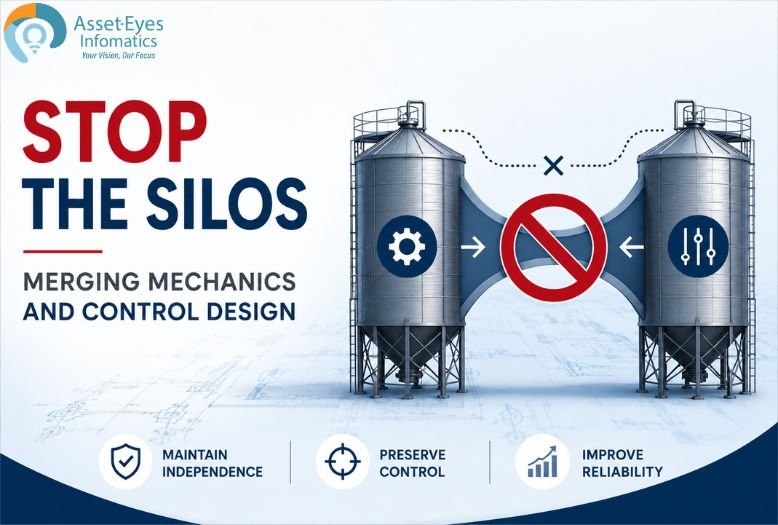
Picture this all-too-familiar commissioning day scenario: You’re standing on the shop floor watching a beautifully engineered machine that should be running perfectly. The mechanical team built a robust, precision frame that moves exactly as designed. The control design team programmed flawless logic that runs like a dream in simulation. But when it’s time to bring them together, chaos unfolds.
The proximity sensor has nowhere to mount properly. Cable routing paths are completely blocked by moving linkages. The electrical control panel had to be awkwardly bolted outside the machine’s footprint because nobody reserved space inside the frame. And now you’re listening to the inevitable finger-pointing: “The machine is fine, controls just needs to tune the logic” versus “We’re fighting the mechanics—the sensor’s in the wrong place, the actuator’s undersized, and there’s no room in the panel.”
Meanwhile, the machine that was supposed to be commissioned today still doesn’t run the way it was sold.
This article explores why modern industrial machines simply can’t afford to treat mechanical design and control systems as separate worlds. We’ll break down the most common integration problems and show you what a unified machine design approach actually looks like one that prevents those costly commissioning surprises.
1. Why the “Mechanics vs. Controls” Battle Is a False Choice
Think of building a machine like constructing a house. You wouldn’t finalize the floor plan, then hand it to the plumber and electrician saying “figure out where everything goes.” The plumbing, electrical, and structural work all need coordination from early in the design process because each one constrains and enables the others. Machine design works exactly the same way.
On paper, the division seems clean: mechanical engineers handle structures, frames, mechanisms, and motion paths, while electrical engineers focus on PLCs, HMIs, drives, and control logic. In reality, the machine your customer actually cares about is the seamless integration of both disciplines.
Consider what really matters to end users: position accuracy, cycle time, reliability, and maintainability. These aren’t “mechanical” or “electrical” outcomes—they’re mechatronic outcomes that live in the integration between both systems.
Here’s what happens when integration fails:
- A perfectly rigid gantry with poorly tuned servos will still vibrate and overshoot
- A correctly sized actuator with a flimsy mounting bracket will chatter and mis-position regardless of control logic quality
- An elegantly designed control panel doesn’t help if field devices are mounted where they can’t be wired or serviced
Modern machines are closed-loop systems where structure, sensors, actuators, and control logic can’t be treated as independent decisions. Yet many projects still follow this problematic pattern: mechanics get designed and mostly frozen, then controls gets asked to “add” sensors, actuators, and panels around the existing structure. Commissioning becomes the integration lab that should have existed during the design phase.
2. The Four Critical Integration Failure Points
2.1 Sensor Placement: Where “Just Put a Prox Somewhere” Goes Wrong
Sensor placement represents one of the most common failure points between mechanical and control design. These devices are the eyes and ears of any automated system, but they need more than just a clear line of sight to their targets.
Typical problems include sensors mounted on moving parts instead of fixed references (creating inconsistent signals), no physical mounting space after mechanical design is complete, placement in harsh environments like oil spray or heavy vibration zones, and impossible cable routing to reach sensor locations.
Designing sensor integration correctly means:
- Deciding what needs measurement (presence, position, speed, temperature, pressure) during the concept stage
- Agreeing on sensor types and form factors early in the process
- Building dedicated mounting features directly into the CAD model—bosses, tabs, plates, clamps, and protected pockets
- Accounting for line of sight requirements and magnetic field interference
- Involving controls engineers in general assembly drawing reviews, not after they’re “finished”
When you’re using structured cad design services or in-house 3D tools, sensor mounting surfaces should be designed features, not field improvisations.
2.2 Cable Routing: The Afterthought That Becomes a Reliability Nightmare
Cable routing often stays invisible in early CAD renderings but becomes painfully obvious during assembly. Poor routing creates bend radius violations on servo and encoder cables, lacks provisions for moving cables (no energy chains or slack management), creates path conflicts with sharp edges and moving parts, and provides no support for long cable runs.
These routing problems translate directly into intermittent faults, nuisance downtime, broken conductors, and frustrating troubleshooting sessions where “the machine only trips when axis 2 moves to this specific position.”
Integrated cable routing design treats wiring like any other mechanical system:
- Define cable bundles and rough harness paths early as simple envelopes
- Add cable trays, brackets, tie points, and grommets to the mechanical design from the start
- Allow realistic bend radii and service loops in moving axes
- Reserve space for cable chains and drag chains, including minimum bending radius and mounting hardware
- Coordinate which side of the machine cables will enter and exit the control panel
When a machine design company builds routing into the 3D model, the “how are we going to wire this?” question gets answered before steel is cut.
2.3 Actuator Selection: Where Physics Meets Control Theory
Actuators whether electric cylinders, pneumatic cylinders, servo axes, or stepper motors represent the critical intersection where mechanical loads meet control performance requirements.
When design happens in silos, you get undersized actuators selected only from static calculations without considering acceleration and duty cycle, oversized units chosen “just to be safe” that drive up costs, dynamic mismatches where mechanical stiffness doesn’t match drive tuning ranges, and control expectations that assume infinite stiffness in very real, flexible systems.
Better actuator selection treats sizing as a joint mechanical-controls problem:
- Define required motion profiles including speed, acceleration, dwell, and positioning tolerances
- Estimate system mass, inertia, friction, and load variations accurately
- Choose drive technology (pneumatic vs. electric, servo vs. stepper) based on control requirements
- Verify that mounting structures provide sufficient rigidity for required control bandwidth
- Confirm that drive and PLC hardware can handle necessary feedback and coordination
Actuator sizing connects directly to electrical system design through drive ratings, power supplies, and protection devices.
2.4 Control Panel Layout: Designing the Machine’s Nervous System
Control panels often get treated as separate packages: “We’ll design the machine, and someone will add a panel on the side.” This approach creates mounting space problems, cable entry chaos where panel location doesn’t align with routing paths, thermal issues from poor placement, and serviceability nightmares where technicians can’t safely access components.
Thoughtful control panel design starts with the machine context:
- Decide early where operators and technicians will work and place panels accordingly
- Coordinate main panel size and mounting structure in the mechanical model
- Plan for short, clean cable runs between field devices and panel entry points
- Integrate environmental protection based on actual panel location
Using integrated electrical tools and coordinating them with mechanical CAD environments ensures diagrams, 3D layouts, and physical machines all agree with each other.
3. What Unified Machine Design Actually Looks Like
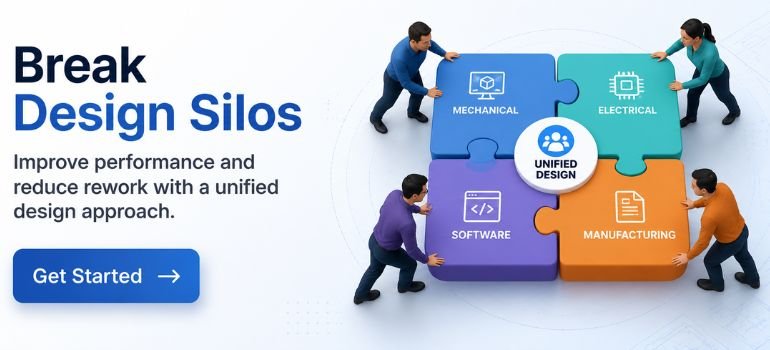
A unified mechatronic design process is less about buzzwords and more about structuring design work properly. It means the people making mechanical decisions and the people making control decisions work from the same model, on the same timeline, with regular structured communication.
Start With Behavior, Not Components
Instead of beginning with frames, motors, and PLC brands, start by defining what the machine needs to do in detail, what variables must be measured, what states must be controlled, acceptable cycle time and accuracy, and failure modes that can’t be accepted.
From there, define motion axes, sensing requirements, interaction points, and required control logic structure. Both mechanical and controls teams design to that shared behavioral specification.
Co-Design in the CAD Environment
Whether you’re doing in-house CAD work or using outsourced cad drafting services, treat CAD as a collaboration space rather than just a mechanical deliverable. Model sensors, actuators, panels, cable chains, and junction boxes as real components. Reserve space envelopes for cables and harnesses. Use clear layers for mechanical versus electrical views while keeping them aligned.
Define Interfaces Explicitly
Many integration headaches come from implicit assumptions. Instead, explicitly define mechanical-to-electrical interfaces (mounting faces, hole patterns, sensor brackets), electrical-to-controls interfaces (I/O counts, signal types, communication buses), and controls-to-operations interfaces (HMI layout, indicators, safety devices).
4. Industry Applications Where Integration Matters Most
This integrated approach applies across industries where machines combine moving parts, sensing, and control logic. In heavy industrial equipment like conveyors and material handling systems, downtime costs make integration critical. Custom automation including pick-and-place and assembly lines depends on integration for cycle time and repeatability. Manufacturing support systems need coordinated mechanical and control design for reliability. Even HVAC equipment design and industrial ventilation systems require integrated approaches for variable-speed fans, dampers, and actuated components to achieve energy efficiency and stable operation.
5. How Asset-Eyes Approaches Integrated Machine Design
As a machine design company, Asset-Eyes positions mechanical and control integration at the center of our design process. We don’t treat controls as an add-on to mechanical systems we develop them together from the start.
Our integrated approach includes:
- Behavior-first design that works backward from performance requirements to mechanical structure and control architecture
- CAD and controls development that treats sensors, actuators, panels, and cable routing as integral design elements
- Electrical control panel design that coordinates with mechanical arrangements from early design stages
- Focus on practical, commissionable machines that ask whether technicians can actually reach components and whether cables will survive real operating conditions
Whether you need comprehensive cad design services, solidworks drafting, or integrated control panel design, we approach each project as a complete mechatronic system rather than separate mechanical and electrical packages.
Key Takeaways for Better Machine Integration
Modern machines demand that mechanical and controls design grow up together, not in isolation. Most commissioning problems stem from design process issues, not bad luck or poor execution. A unified mechatronic approach starts from machine behavior rather than favorite components, co-designs in CAD so all systems are modeled rather than improvised, defines interfaces clearly, and involves commissioning experience in design decisions.
Partnering with a machine design company that thinks in mechatronic terms from day one dramatically reduces integration problems and creates machines that are easier to build, commission, and maintain over their service life.
If you’re planning equipment that needs seamless integration between mechanical systems and control logic—or if you’re tired of costly commissioning surprises—Asset-Eyes can partner with you from early concept through detailed documentation.
Contact Us Now:
📞 +91 9840895134
Frequently Asked Questions
1. Why do mechanical and control systems need to be designed together rather than sequentially in modern machine design?
Mechanical and control systems must be designed together because the outcomes customers actually care about—position accuracy, cycle time, reliability, and maintainability—are mechatronic outcomes that live in the integration between both disciplines. A perfectly rigid gantry with poorly tuned servos still vibrates and overshoots. A correctly sized actuator with a flimsy mounting bracket chatters and mis-positions regardless of control logic quality. Modern machines are closed-loop systems where structure, sensors, actuators, and control logic cannot be treated as independent decisions.
2. What are the four critical integration failure points between mechanical and control design that cause commissioning problems?
The four critical integration failure points are sensor placement, cable routing, actuator selection, and control panel layout. Sensor placement fails when mounting space doesn’t exist after mechanical design is complete or sensors end up in harsh environments. Cable routing creates reliability nightmares when treated as an afterthought, causing bend radius violations and path conflicts. Actuator selection fails when sized only from static calculations without considering control performance requirements. Control panel layout creates mounting, thermal, and serviceability problems when designed as separate packages.
3. How does poor sensor placement between mechanical and control design teams cause automation system failures?
Poor sensor placement creates systematic automation failures through multiple mechanisms: sensors mounted on moving parts instead of fixed references produce inconsistent signals, placement in oil spray or heavy vibration zones causes premature failure, and impossible cable routing makes installation impractical. When controls engineers aren’t involved in general assembly drawing reviews, there’s no physical mounting space after mechanical design is complete. Sensors need dedicated mounting features—bosses, tabs, plates, and protected pockets—designed directly into the CAD model rather than improvised during commissioning.
4. Why does cable routing deserve early mechanical design attention rather than being resolved during machine assembly?
Cable routing treated as an afterthought directly creates intermittent faults, nuisance downtime, broken conductors, and frustrating troubleshooting sessions where machines only trip at specific axis positions. Poor routing causes bend radius violations on servo and encoder cables, creates path conflicts with sharp edges and moving parts, and provides no provisions for moving cables through energy chains. When cable bundles and harness paths are defined early as design envelopes with trays, brackets, tie points, and grommets integrated into mechanical design, wiring questions get answered before steel is cut.
5. How should actuator selection be approached as a joint mechanical-controls engineering problem?
Actuator selection must integrate mechanical and controls requirements simultaneously rather than treating sizing as purely mechanical calculation. Effective joint selection defines required motion profiles including speed, acceleration, dwell, and positioning tolerances, then estimates system mass, inertia, friction, and load variations accurately. Drive technology choices between pneumatic and electric, servo and stepper, must be based on control requirements. Mounting structures must provide sufficient rigidity for required control bandwidth, and drive and PLC hardware must handle necessary feedback and coordination throughout the system.
6. What does a unified mechatronic design process look like in practice compared to traditional siloed approaches?
A unified mechatronic design process starts with machine behavior rather than components, defining what the machine needs to do, what variables must be measured, acceptable cycle time and accuracy, and unacceptable failure modes before selecting hardware. Both mechanical and controls teams design to that shared behavioral specification simultaneously. CAD environments become collaboration spaces rather than purely mechanical deliverables, with sensors, actuators, panels, cable chains, and junction boxes modeled as real components. Interfaces between mechanical, electrical, and controls systems are explicitly defined rather than left as implicit assumptions.
7. Why does treating control panels as separate packages create expensive problems during machine commissioning?
Treating control panels as separate add-on packages creates mounting space problems when mechanical structure has no provisions for panel integration, cable entry chaos when panel location doesn’t align with routing paths developed for field devices, thermal issues from poor placement without considering heat generation and ventilation, and serviceability nightmares when technicians can’t safely access components during operation. Thoughtful panel design requires early decisions about where operators and technicians will work, coordinating main panel size and mounting structure within the mechanical model from the start.
8. How does starting machine design with behavior rather than components improve mechatronic integration outcomes?
Starting with behavior rather than components forces both mechanical and controls teams to align around shared performance requirements before any design decisions are made. Defining what the machine must do in detail, what variables must be measured, what states must be controlled, and what failure modes cannot be accepted creates a behavioral specification that drives both mechanical structure and control architecture simultaneously. This prevents the common failure pattern where mechanics get designed and frozen first, then controls gets asked to add sensors, actuators, and panels around existing structure.
9. Which industrial applications benefit most from integrated mechanical and control design approaches?
Integrated mechatronic design delivers the greatest benefits in applications where downtime costs are high and performance requirements are precise. Heavy industrial equipment including conveyors and material handling systems suffer expensive downtime from integration failures. Custom automation including pick-and-place and assembly lines depends on integration for cycle time and repeatability targets. Manufacturing support systems require coordinated mechanical and control design for reliability. Even HVAC equipment design and industrial ventilation systems require integrated approaches for variable-speed fans, dampers, and actuated components to achieve energy efficiency.
10. How does Asset-Eyes approach integrated machine design to prevent costly commissioning surprises?
Asset-Eyes positions mechanical and control integration at the center of their design process, developing both disciplines together from project inception rather than treating controls as an add-on to completed mechanical systems. Their behavior-first design approach works backward from performance requirements to mechanical structure and control architecture simultaneously. CAD and controls development treats sensors, actuators, panels, and cable routing as integral design elements. Electrical control panel design coordinates with mechanical arrangements from early design stages, with practical commissionability verified by ensuring technicians can actually reach components and cables survive real operating conditions.